
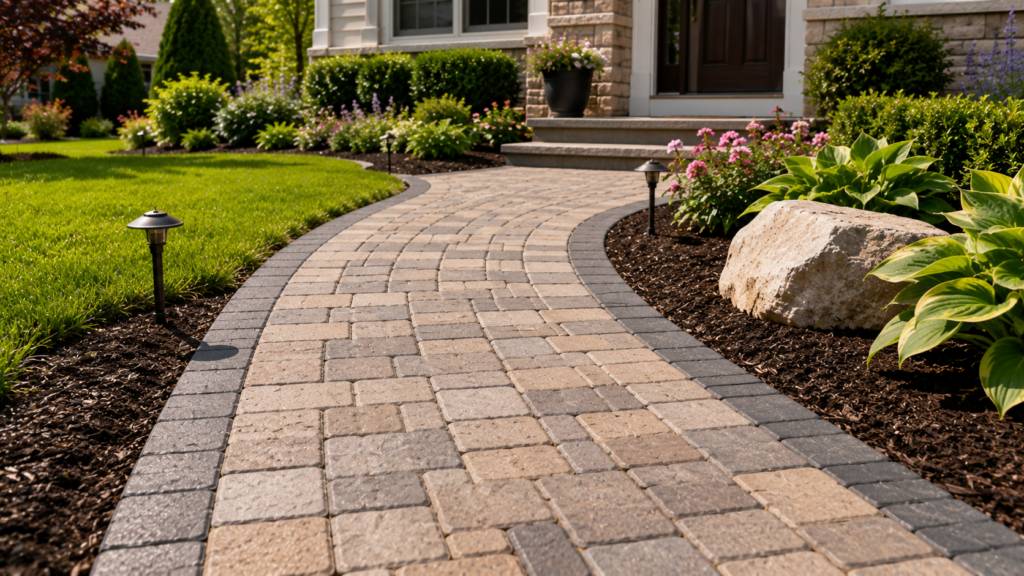
A well-built paver walkway should feel solid, drain properly, and look good from the curb year after year. Most walkway problems people run into (sinking, shifting, weeds, and uneven edges) come down to planning, base prep, and how the joints and edges are handled.
This guide focuses on paver walkway installation fundamentals in plain language: what affects cost, how to choose width and materials, what makes a strong base, and what to do to prevent future repairs.
Table of Contents
What is paver walkway installation and why do homeowners choose it?
Paver walkway installation is the process of building a walking path using interlocking pavers (often concrete pavers, brick pavers, or natural stone) set on a compacted base with sand in the joints.
Homeowners often choose pavers because they offer a strong mix of function and curb appeal:
- Repairability: If a section settles, individual pavers can often be lifted and reset instead of replacing the whole walkway.
- Design flexibility: Shapes, colors, borders, and patterns can match a home’s style.
- Traction: Many pavers have textured surfaces that work well for walkways.
- Drainage control: When graded correctly, a paver pathway can shed water where you want it to go.
The big tradeoff is that pavers are only as good as the prep underneath them. A great-looking walkway can still fail early if the base and edging are not done right.
How much does paver walkway installation cost and what affects the price?
Paver walkway installation cost depends on walkway size, paver type, base depth, demolition needs, and site access. Two walkways can be the same length and still price out very differently.
Common cost factors include:
- Size and layout: Total square footage, curves, steps, and landings.
- Paver choice: Concrete vs brick paver walkway vs natural stone, plus border details.
- Demolition and disposal: Removing old concrete, old pavers, or poorly compacted material.
- Excavation needs: How deep the base must go based on soil and drainage conditions.
- Base materials and compaction: More base work usually means better long-term performance, but it adds labor and material.
- Edging approach: Quality paver walkway edging and edge restraint details matter for durability.
- Site access: Tight access can increase labor time.
- Drainage and grading: Fixing water flow issues can be a big part of a “simple walkway” project.
If you are comparing contractors, ask what is included in base prep, edging, and final compaction. Those three items often separate a quick install from a long-lasting one.
How long does paver walkway installation take from start to finish?
Most paver walkway installation projects follow a predictable sequence. Timeline depends on length, complexity, weather, and whether demolition is involved.
Typical phases:
- Layout and planning: Confirm path, width, and grades (how water will move).
- Excavation: Remove sod and soil to make room for base layers.
- Base installation and compaction: Build a stable foundation in controlled layers.
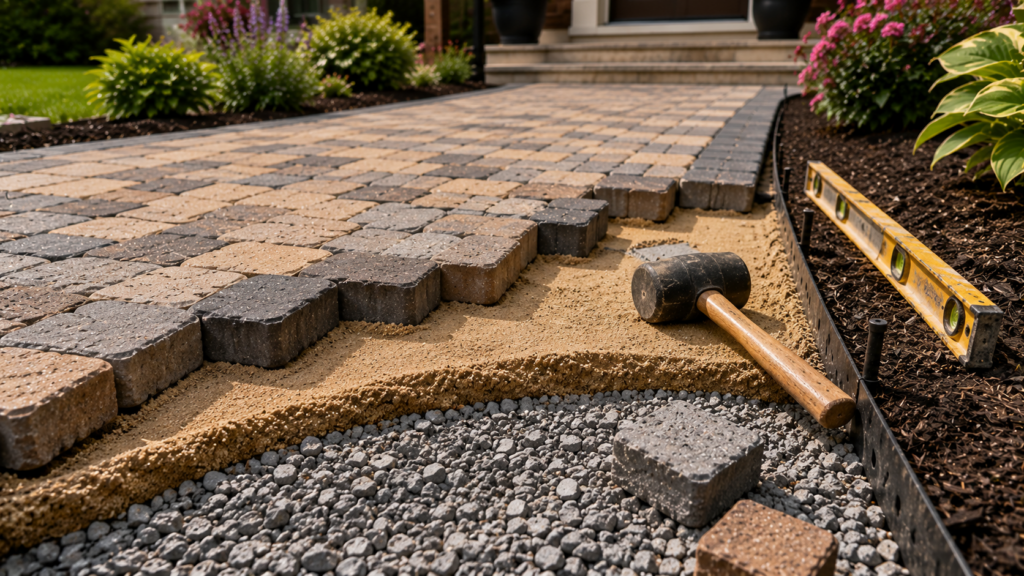
- Bedding layer: Create a smooth setting layer for consistent height.
- Paver placement: Set pavers, cut edges, and maintain straight lines or curves.
- Edge restraint: Lock the perimeter so pavers do not spread.
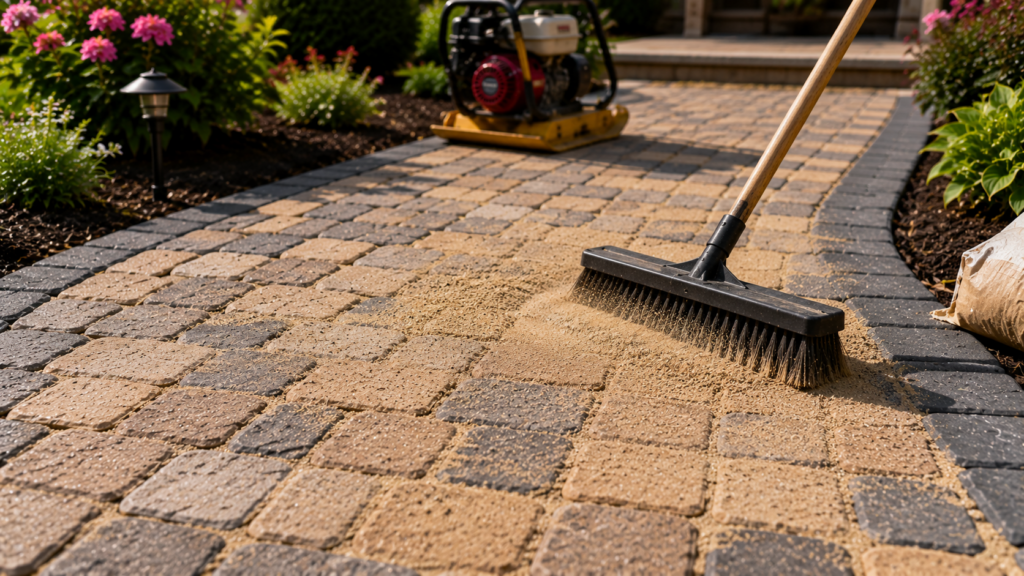
- Jointing and compaction: Sweep sand into joints and compact to lock everything together.
- Final clean-up: Top off joints and confirm finished drainage.
A key timing point: if you use polymeric sand for pavers, follow the product’s required conditions (surface dryness and watering steps) so joints harden correctly.
How wide should a paver walkway be for comfort and curb appeal?
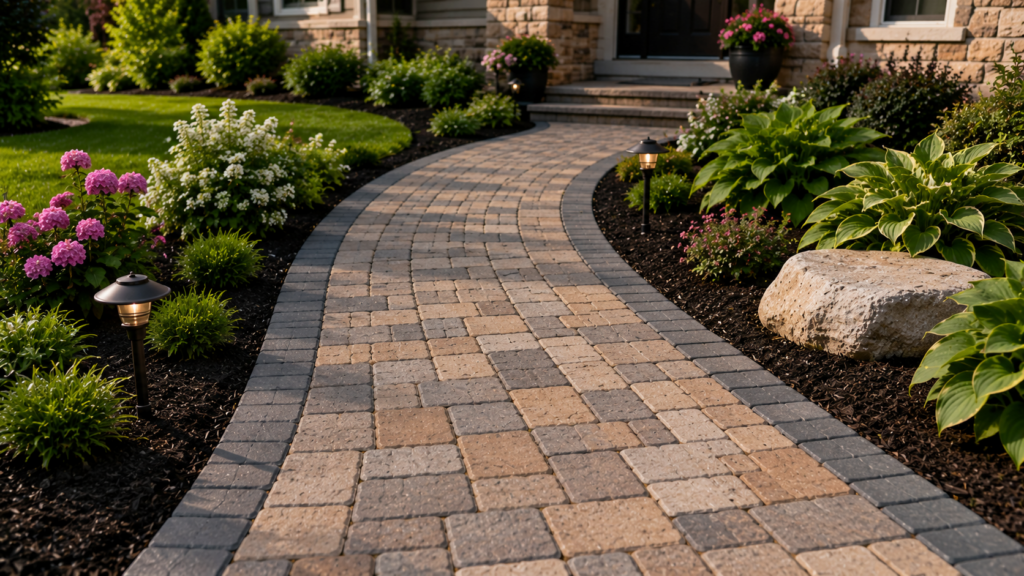
“How wide should a walkway be” is one of the most searched planning questions, and for good reason. Width affects comfort, appearance, and how the space feels from the street.
Conservative, practical guidance:
- Comfort minimum: Many homeowners find a walkway around 3 feet wide workable for one person.
- More comfortable: 4 feet often feels better for two people walking side-by-side or passing comfortably.
- High-traffic or showpiece entries: Wider paths (or wider sections near the entry) can feel more welcoming.
Other width considerations:
- Curves: Curved paths often feel better slightly wider than straight paths.
- Approach to steps and doors: Consider a wider landing area where people naturally stop.
- Maintenance: A too-narrow path can be harder to edge and keep clean.
If you are unsure, mock it up with a garden hose and a tape measure before excavation. Seeing the width in place prevents regrets later.
What is the best base for a paver walkway and why does it matter?
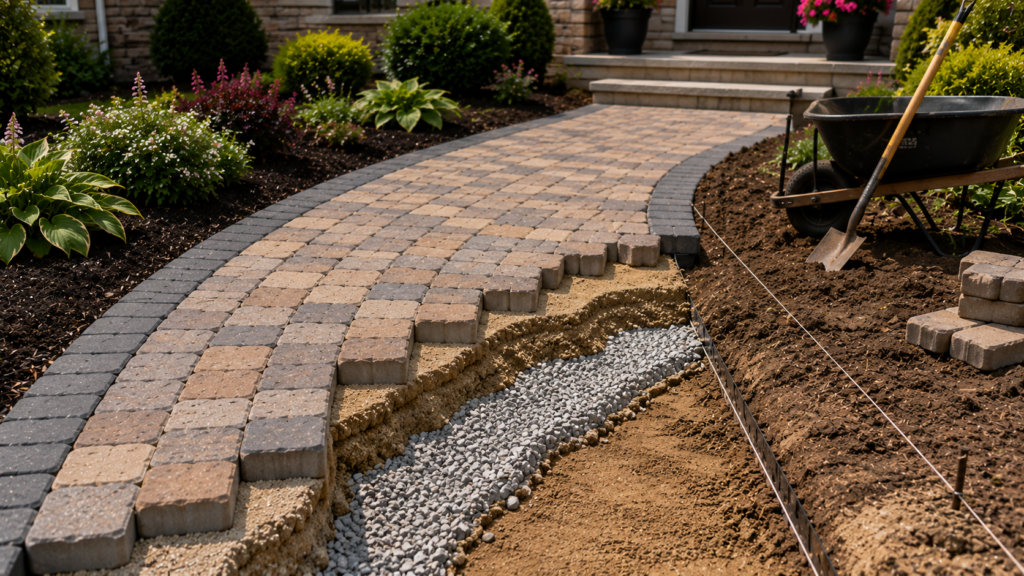
A properly built and compacted base is the main reason a paver walkway stays level and does not sink over time. When people search “how to prevent pavers from sinking,” the base is usually the answer.
A strong base typically focuses on:
- Correct excavation depth: Enough room for base layers plus the pavers, while maintaining the right finished height.
- Compacted crushed stone base: A stable aggregate layer that spreads loads and drains better than soil.
- Proper compaction: Compaction in manageable layers, not all at once.
- Consistent grade: The base needs the right slope so water does not sit under the pavers.
Why it matters:
- A weak base settles.
- A base that traps water gets softer over time.
- Uneven compaction creates low spots and wavy sections.
If your soil stays wet, is very soft, or has a lot of clay, base prep becomes even more important. That is also where a pro evaluation can prevent repeat repairs.
Do you need edging for a paver walkway to keep pavers from spreading?
In most cases, yes. Paver walkway edging (edge restraint) is what keeps the field of pavers tight and stable over time.
Without solid edging, you are more likely to see:
- Edges drifting outward
- Joints widening
- Corner pavers loosening first
- Uneven lines that get worse each season
Common edging approaches include:
- Plastic or composite edge restraint anchored into the base
- Metal edging for a clean, crisp line
- Concrete edge restraint in certain designs
- Border courses (a contrasting paver border can help reinforce the edge)
Edging is not just cosmetic. It is a structural part of paver walkway installation.
What types of pavers work best for walkways?
The “best” pavers depend on the look you want and the conditions the walkway needs to handle.
Common options:
- Concrete pavers: Popular for walkways, available in many shapes and colors, consistent sizing.
- Brick paver walkway (clay brick): Classic look, often used for traditional homes and historical styles.
- Natural stone: High-end appearance, but thickness and surface texture should be matched to walkway use.
How to choose:
- Traction: Prioritize a surface that is comfortable and not overly slick when wet.
- Thickness and durability: Walkways do not carry vehicle loads, but they still need enough strength to resist shifting.
- Style match: Front walkway pavers should complement the home’s exterior colors and architecture.
- Maintenance expectations: Some finishes show dirt or joint issues faster than others.
If you are stuck, pick pavers that match the home first, then confirm the pattern and border details based on the path shape.
Can you install a paver walkway over existing concrete?
Yes, sometimes. “Can you install pavers over concrete” is common because homeowners want to avoid demolition.
A paver overlay can work if the concrete is:
- Structurally sound (not heavily cracked or broken)
- Not sinking or heaving
- Sloped correctly so water drains away
- At a height that will not create trip hazards at doorways, steps, or transitions
Important tradeoffs:
- If the concrete already has drainage problems, pavers on top may not fix them.
- Height buildup can cause issues at thresholds and adjacent surfaces.
- You still need a plan for edges and water movement.
If you are considering this approach, it helps to get the concrete evaluated before committing.
How do you prevent pavers from sinking, shifting, or settling over time?
Most long-term problems come from water and base issues. Preventing settling is about controlling both.
Key prevention checklist:
- Excavate properly: Remove soft organic material and make room for a real base.
- Build the base in compacted layers: Compaction quality is more important than rushing.
- Use proper grading: Keep water moving away from structures and away from low spots.
- Control runoff: Avoid letting downspouts or drainage discharge onto the walkway area.
- Install edge restraint: Edges are where movement often starts.
- Keep joints filled: Joint sand helps lock pavers together and reduce movement.
If a walkway keeps settling in one spot, the cause is usually repeated water flow or a weak subgrade in that zone. Fixing the symptom without fixing the cause often leads to repeat repairs.
What sand should you use between pavers and when should you use polymeric sand?
Sand choice affects stability, weed growth, and how well the walkway holds up to rain and cleaning.
Two common options:
- Regular joint sand: Easier to top off over time, but may wash out more easily depending on conditions.
- Polymeric sand for pavers: Designed to harden in the joints after correct installation, which can help reduce washout and joint movement.
When polymeric sand may be a good fit:
- You want stronger joint performance
- The walkway gets heavy rain flow across it
- You want to reduce weed growth from open joints (it is not a magic weed-proofing solution, but it can help)
What matters most:
- Joints must be clean and properly filled.
- The surface must meet the product’s conditions before activation.
- Over-wetting or under-wetting can cause haze or weak joints.
If you do not want the maintenance risk of doing it wrong, this is one of the steps many homeowners prefer to hire out.
How do you stop weeds between pavers on a walkway?
Weeds between pavers usually mean the joints are holding moisture and debris because the joint material is low or missing.
Practical weed prevention steps:
- Keep joints full: Top off joint sand before weeds take hold.
- Reduce debris: Leaves and soil build up in joints and feed growth.
- Choose the right joint material: Polymeric sand can help reduce washout and open joints.
- Avoid aggressive pressure washing: It often strips joint sand and makes weed issues worse.
- Fix water patterns: If water constantly runs through the same joints, sand loss and weeds become more likely.
Weeds are usually a symptom of joint conditions. Long-term control comes from joint maintenance and water control.
When should you hire a professional for paver walkway installation?
Hiring a pro is most valuable when the project has higher risk factors or you want it done once and done right.
Consider professional help if:
- The walkway needs grading to drain properly
- You have soft or wet soil where base prep is tricky
- The design includes steps, curves, or multiple elevations
- You are considering pavers over concrete and need the slab evaluated
- You want the cleanest finish on cuts, borders, and edge restraint
- You want compaction and base work done with the right equipment
Short CTA: If you want a walkway that stays level and looks clean season after season, request an estimate and ask for a clear plan for base prep, edging, and jointing before the work starts.
What paver walkway installation questions do people ask most often?
How much does a paver walkway cost compared to concrete?
Cost depends on size, materials, base prep, and demolition needs. Concrete can be simpler in some cases, while pavers can offer easier spot repairs later. The best comparison is based on your site conditions and the finished look you want.
What base thickness do you need for a paver walkway?
Base thickness depends on soil strength, drainage, and climate. Many contractors build walkways with multiple inches of compacted crushed stone, adding more base depth when soils are weak or freeze and thaw movement is a concern. The safest approach is to size the base to the site rather than using a one-size number.
Is polymeric sand worth it for a walkway?
It can be worth it when you want stronger joints and less washout. The result depends heavily on correct installation and proper activation, so it is best used when the surface and weather conditions allow a clean install.
Can you install pavers over a cracked concrete walkway?
Sometimes, but it depends on why it cracked. If the concrete is cracked because it is moving, settling, or heaving, covering it may not stop movement from telegraphing into the pavers. If the slab is stable and properly sloped, an overlay may be possible.
How do you keep pavers from sinking in high-traffic areas?
Sinking prevention is mostly base and water management: proper excavation, compacted base layers, correct slope, and solid edge restraint. High-traffic areas also benefit from consistent joint maintenance so the surface stays locked together.
What is the best paver pattern for a walkway?
Patterns that interlock well can help stability, especially on curves or transitions. The “best” pattern also depends on the paver shape, the walkway width, and the look you want from the curb.
Do you need to seal a paver walkway?
Sealing is optional. Some homeowners seal for easier cleaning or appearance, while others skip sealing and focus on joint maintenance. If you seal, make sure the surface and joints are in good condition first.
How do you maintain a paver walkway after it is installed?
Basic maintenance usually includes occasional cleaning, keeping joints topped off, and managing weeds early. If joints become low or washed out, addressing that quickly helps prevent shifting and settling.
Final CTA: If you are planning a paver walkway installation and want a clear, practical plan (layout, base, edging, and joints), request an estimate from our team so you can make decisions confidently before any digging starts.
Key Takeaways
- A successful paver walkway installation starts with proper excavation, base depth, and compaction.
- Most walkway failures trace back to water movement or inadequate base preparation.
- Paver walkway edging and joint sand both play structural roles in long-term stability.
- Correct slope and runoff control help prevent settling and future repairs.
- Careful planning upfront makes paver walkway installation more durable and easier to maintain.
- Contact Land and Lawn Services before starting your paver walkway installation to get the base and edging right the first time.
References
Interlocking Pavement Guides
[1] Operation and Maintenance Guide for Interlocking Concrete Pavement.
Permeable Pavement Specs
[2] Tech Spec 23: Maintenance Guide for Permeable Interlocking Concrete Pavements. PDF.
Polymeric Sand Guidance
[3] Polymeric Sand Installation Guidelines. PDF.
[4] Polymeric Sand: Installation Guidance and Best Practices.
Cleaning and Sealing Guides
[5] Cleaning and Sealing Interlocking Concrete Pavement: A Maintenance and Protection Guide. PDF.
Freeze Thaw Research
[6] Impact of Freeze-Thaw Cycles on Pavement Materials and Damage Mechanisms.