
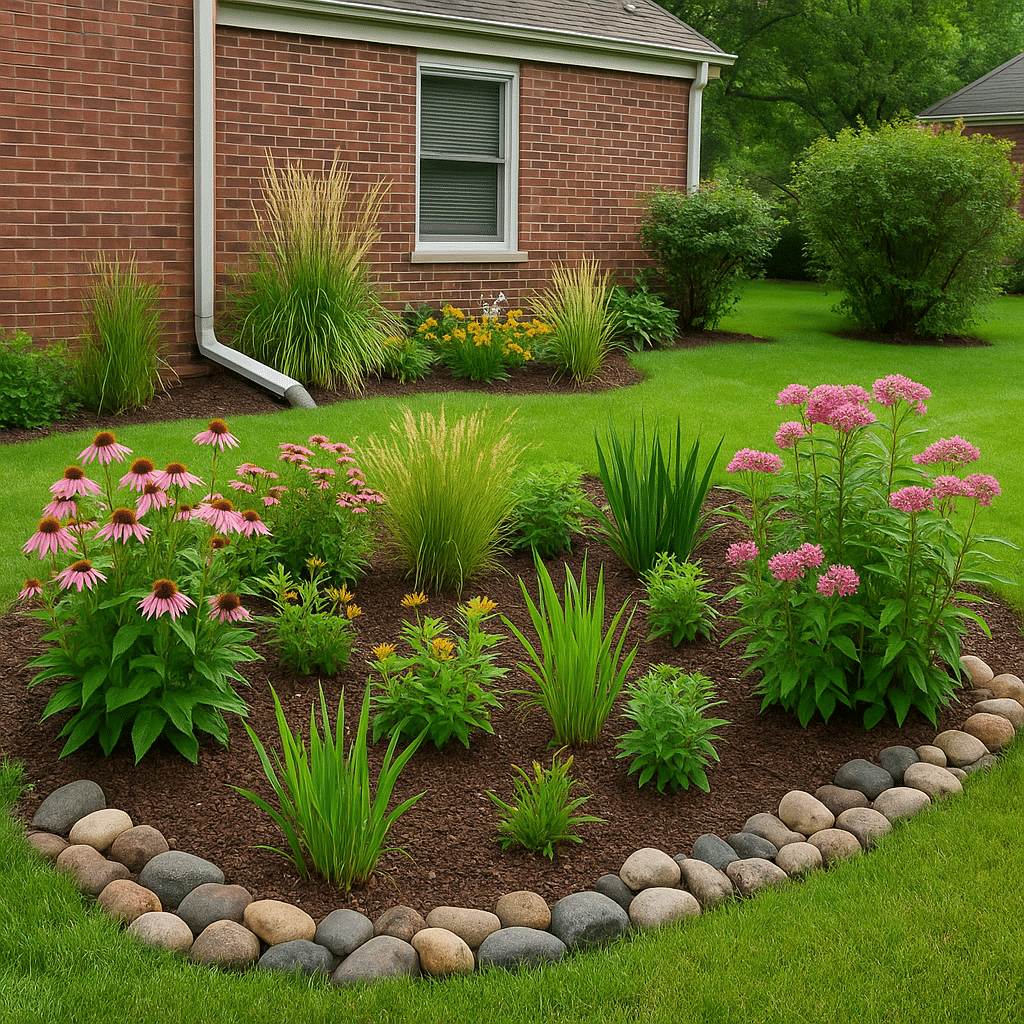
Rain garden landscaping is a smart, sustainable way to manage stormwater while beautifying your yard. These specially designed gardens collect and absorb rainwater runoff from roofs, driveways, and patios, reducing water pollution and flooding. Homeowners in Illinois often face water pooling or soggy lawns after heavy rains, making this solution especially helpful. With careful plant selection and proper drainage planning, rain gardens can be both functional and stunning. Whether you’re concerned about your foundation or just want to create a low-maintenance garden, this landscaping trend is growing for good reason—and it’s easier to install than you might think.
Table of Contents
How Rain Gardens Work
Rain gardens are shallow depressions built into the landscape to capture and slowly filter runoff. They are filled with porous soil and deep-rooted plants that help water soak into the ground naturally.
Unlike standard flower beds, rain gardens are specifically engineered to improve drainage. They divert water away from your home and allow it to absorb over time, reducing erosion and groundwater contamination. The result is a lush, native plant habitat that supports pollinators and prevents standing water, even after the heaviest Midwest storms.
The Environmental Benefits
Rain gardens act as natural filters for stormwater. As runoff flows into the garden, the soil and plants capture sediment, oils, and chemicals before they reach nearby rivers or sewer systems.
This makes them ideal for eco-conscious homeowners. Rain gardens can reduce the volume of water that enters storm drains, helping prevent flooding and strain on municipal systems. Plus, they enhance biodiversity, bringing in birds, butterflies, and beneficial insects—turning your yard into a sustainable oasis.

Choosing the Right Location
Placement is everything when designing a rain garden. Ideally, it should be located at the bottom of a slope or near areas that receive frequent runoff, such as downspouts or driveways.
However, it should be placed at least 10 feet from your home’s foundation to avoid infiltration problems. A professional landscaping team can assess your property’s contours and help select a safe, effective location that maximizes performance and visual appeal.
Selecting the Best Plants
Plant selection is crucial for both function and beauty. Native perennials, grasses, and wildflowers work best because they’re drought-resistant and adapted to local rainfall patterns.
Popular choices in Illinois include coneflowers, black-eyed Susans, and prairie dropseed. These deep-rooted plants help absorb water while attracting pollinators and wildlife. Using a mix of bloom times ensures your rain garden looks great spring through fall.
Soil Composition and Drainage Layers
Rain gardens require more than just digging a hole and adding plants. The soil needs to be amended for fast drainage, typically using a mix of sand, compost, and topsoil.
Beneath the soil layer, a gravel base may be installed to further assist water infiltration. This ensures that your rain garden doesn’t become a swamp. Proper grading and soil testing can determine the exact composition for optimal results.

Maintenance Tips for Long-Term Success
Rain gardens are low-maintenance but not zero-maintenance. During the first year, regular watering and weeding are essential to establish strong roots.
Once mature, they require minimal care—just occasional pruning and mulching. Removing debris after storms helps maintain water flow. Unlike a lawn, there’s no mowing required, making it an excellent option for reducing your weekly yard chores.
Rain Garden Landscaping for Curb Appeal
Rain garden landscaping doesn’t just serve a function—it adds beauty and property value. With the right edging, plant mix, and design flow, rain gardens can become a centerpiece of your yard.
They blend seamlessly with hardscaping like paver walkways or decorative stone, offering both charm and utility. Whether paired with native wildflower beds or modern outdoor living spaces, they make your landscaping look intentional and polished.
When to Call in the Pros
Installing a rain garden requires careful grading, soil work, and drainage planning. While DIY is possible, professional landscapers ensure everything is done right—from depth to plant placement.
Land and Lawn Services can help homeowners across Illinois create a custom rain garden that fits both aesthetic preferences and functional needs. Their team handles everything from excavation to final planting, ensuring your rain garden does its job beautifully for years to come.

Conclusion: A Smart Investment for the Future
If you’re looking for a way to manage water, boost curb appeal, and help the environment, rain garden landscaping is a fantastic investment. It’s a solution that looks good, performs well, and lasts.
In areas like Northern Illinois, where heavy rains are common, having a rain garden can mean the difference between a flooded lawn and a flourishing landscape. Add beauty. Add function. Go with the flow—with rain garden landscaping.