
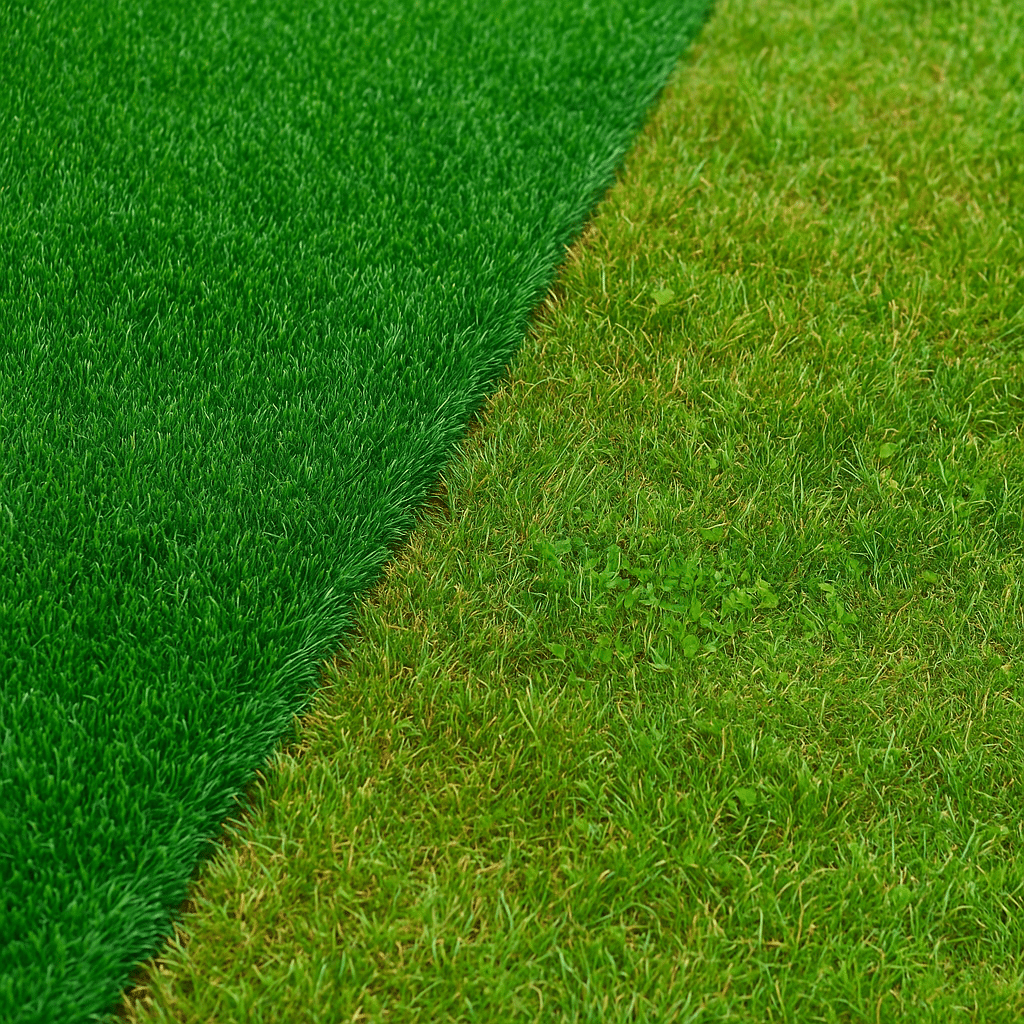
Artificial turf vs natural grass is one of the most searched comparisons homeowners make when planning their dream yard. This choice plays a major role in how your outdoor space will look, feel, and function over time. From maintenance levels to environmental impact, there are many important differences to understand. Some homeowners want a lush, organic lawn; others prioritize durability and convenience. As landscaping technologies advance and eco-awareness grows, the debate continues to heat up. In this guide, we’ll break down the key facts so you can make an informed decision that matches your budget, lifestyle, and design goals.
Table of Contents
Appearance and Realism
Natural grass offers unmatched organic beauty, complete with subtle variations in color, movement in the wind, and seasonal changes. It creates an authentic outdoor experience for homeowners who value nature’s nuances. Artificial turf, on the other hand, has come a long way in mimicking this appearance. High-end synthetic lawns now include multi-tone blades, brown thatch layers, and soft textures that can fool even close-up observers. While some still find artificial turf too uniform, others appreciate its consistent, evergreen look. Your personal style and expectations for realism will heavily influence which surface feels more inviting in your yard.
Artificial Turf vs Natural Grass: A Comparison of Maintenance Needs
The difference in maintenance is one of the most common reasons people consider artificial turf vs grass. Natural grass requires mowing, watering, fertilizing, and weeding—an ongoing commitment, especially during growing seasons. Artificial turf requires far less care, needing only occasional rinsing and brushing to keep debris off and blades upright. No watering or mowing is necessary. However, pet owners may need to deodorize turf regularly. For those seeking minimal upkeep and lower water bills, synthetic lawns are a hassle-free solution. But for lawn care enthusiasts, real grass offers the joy of nurturing living growth.

Environmental Impact
When it comes to sustainability, the turf debate gets more complex. Natural grass contributes to oxygen production and supports biodiversity, but it also demands water, fertilizers, and pesticides that can be harmful to local ecosystems. Artificial turf conserves water and eliminates chemical use, yet it’s made from petroleum-based plastics and eventually ends up in landfills. Newer turf products strive for recyclability, but they’re not biodegradable. For eco-conscious homeowners, choosing between the two involves weighing short-term resource use against long-term environmental footprint. Sometimes blending both solutions—like turf in shady areas and grass where sunlight is ample—offers a balance.
Durability and Longevity
Durability is another major point in the artificial turf vs grass conversation. A natural lawn can wear down in high-traffic areas, developing bald spots or mud patches during rainy months. Artificial turf is more resilient, ideal for families with pets or kids who frequently play outdoors. It resists foot traffic and holds up under seasonal changes, with quality installations lasting 10–15 years. However, turf can heat up under direct sunlight and may require occasional repairs for seam separation. Natural grass, while requiring more upkeep, can regenerate itself and doesn’t degrade with time in the same way as synthetic options.
Cost Considerations Over Time
Installing natural grass is much cheaper upfront than synthetic turf. Seeding or sod is affordable, but the long-term costs of maintenance—equipment, water, fertilizers, and time—add up. Artificial turf involves a higher initial investment but pays off over time by slashing water bills and eliminating lawn care services. Most homeowners break even after 5–8 years depending on usage. If you plan to stay in your home for the long haul, synthetic grass could save you money. But for short-term situations or tight budgets, traditional grass may be the more economical choice.

Comfort and Safety
The way each surface feels underfoot can influence your final choice. Natural grass is cool, soft, and breathable, creating a pleasant space for barefoot play or relaxation. Artificial turf, while cushioned with infill and padding, can become hot in direct sun—sometimes 20–50 degrees warmer than grass. Some turf products use cooling technologies or light-colored blades to combat this issue. Additionally, real grass naturally absorbs shock, while synthetic options may need extra padding for playgrounds or sports use. Those with young children or pets may want to test the surface type in person before committing.
Installation Process and Timeline
Natural lawns can be seeded or sodded quickly, though full establishment may take weeks to months depending on grass type. Synthetic turf requires professional installation, including ground preparation, compacting, and drainage layers. While more complex, turf projects are typically completed in a few days and are ready for use immediately. Homeowners in areas with difficult soil, steep slopes, or heavy shade often choose turf because it avoids long-term growth issues. Still, DIYers may prefer the simplicity and lower barrier of laying real grass themselves.
All-Season Use and Weather Resistance
Artificial turf stands up to seasonal extremes, staying green through hot summers and freezing winters. It drains water efficiently and doesn’t become muddy or dormant like real grass. Natural lawns have their seasonal rhythms—growing lush in spring and summer, browning in heat or frost. Some homeowners love the cycle and don’t mind the dormant winter appearance. Others want a consistent look year-round, particularly for hosting events or enhancing curb appeal. In flood-prone or drought-sensitive areas, turf’s reliability can make it an attractive option for consistent outdoor use.

Wrapping It Up: Which Is Better for You?
When weighing artificial turf vs natural grass, it comes down to your lifestyle, values, and vision for your yard. If you want a lush lawn with minimal maintenance and year-round appeal, synthetic turf may be the answer. If you enjoy gardening, value sustainability, and don’t mind a little work, natural grass brings unmatched beauty and benefits. Blending both approaches—using turf in heavy traffic zones and grass in open areas—can also offer the best of both worlds. Whatever you decide, make sure the surface you choose supports how you live, relax, and enjoy your outdoor space. We are here to help with your needs!